
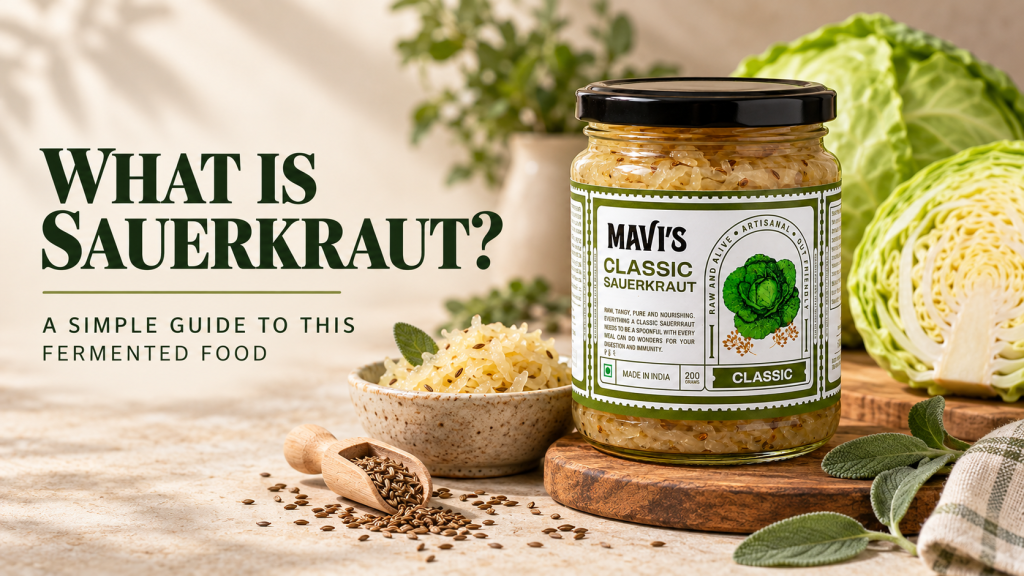
What Is Sauerkraut? A Simple Guide to This Fermented Food
Sauerkraut is one of the most recognised fermented foods in the world. Its crisp texture and pleasantly tangy flavour can add character to sandwiches, salads, wraps and everyday meals.
Although many people associate sauerkraut with European cuisine, you do not need to prepare a traditional European dish to enjoy it. A small serving can complement many familiar foods, including parathas, rice bowls, grilled vegetables and savoury snacks.
So, what is sauerkraut, how is it prepared and what are the easiest ways to serve it? This simple guide answers the most common questions.
What Is Sauerkraut?
Sauerkraut is a traditional fermented food made primarily from cabbage and salt. Its name comes from German and means “sour cabbage.”
During preparation, finely sliced cabbage is combined with salt. The salt helps release liquid from the cabbage, creating a natural brine.
The cabbage then ferments in this brine over time. Naturally present microorganisms transform some of the cabbage’s sugars and gradually create its characteristic tangy flavour.
Unlike quick-pickled cabbage, traditional sauerkraut does not depend on vinegar for its sour taste. Instead, its flavour develops naturally through fermentation.
What Does Sauerkraut Taste Like?
Sauerkraut usually has a sour, salty and slightly earthy flavour. However, the exact taste can differ between batches.
The type of cabbage, quantity of salt, fermentation time and storage conditions can all influence the final product. Some batches may taste mild and fresh, while others may develop a deeper and sharper character.
Texture also plays an important role. Well-prepared sauerkraut often retains a pleasant crunch, making it an interesting contrast to soft bread, cooked rice or creamy dishes.
If you are tasting sauerkraut for the first time, begin with a small portion. You can then adjust the serving according to your preference.
How Is Sauerkraut Different From Pickled Cabbage?
Sauerkraut and vinegar-pickled cabbage may look similar, but their preparation methods are different.
Quick pickling normally uses vinegar to produce an immediate sour flavour. Natural fermentation, meanwhile, develops gradually in a controlled environment.
Time is an essential part of making sauerkraut. The cabbage changes slowly as the fermentation process progresses.
As a result, traditionally fermented sauerkraut develops a layered flavour that differs from the direct sharpness of vinegar-based pickles.
How to Serve Sauerkraut
You can enjoy sauerkraut directly from the jar as an accompaniment. However, it also works well as an ingredient in simple meals.
Here are some easy serving ideas.
Add It to Sandwiches and Wraps
Sauerkraut brings tanginess and crunch to sandwiches, burgers and wraps. Add a small layer to a vegetable, paneer or cheese filling.
Because sauerkraut already has a noticeable flavour, start with a modest amount. You can always add more after tasting the combination.
Serve It With Parathas
A spoonful of sauerkraut can provide a refreshing contrast to stuffed parathas. Serve it on the side instead of using an ordinary pickle.
It pairs particularly well with potato, paneer and mixed-vegetable parathas.
Include It in Salads
Add sauerkraut to cabbage salads, grain bowls and mixed vegetable salads. Its flavour can reduce the need for a large amount of dressing.
For example, combine cooked millet or rice with cucumber, carrots, greens and a small serving of sauerkraut.
Pair It With Grilled Food
Sauerkraut complements grilled vegetables, paneer, cutlets and savoury patties. Its acidity balances rich and smoky flavours.
Serve it separately so everyone can choose their preferred portion.
Use It as a Finishing Ingredient
You can add sauerkraut after preparing a dish instead of cooking it for a long time. This approach helps retain its fresh taste and crisp texture.
Place it over a rice bowl, baked potato or open sandwich just before serving.
Should You Rinse Sauerkraut?
You generally do not need to rinse ready-to-eat sauerkraut unless its label recommends it or you prefer a milder flavour.
Rinsing can reduce some of its saltiness and tanginess. However, it can also remove the brine that contributes to the product’s distinctive character.
A better first step is to serve a smaller portion. If the flavour still feels too strong, you can combine it with bread, rice, vegetables or another mild food.
How to Store Sauerkraut
Always follow the storage directions printed on the product label. If refrigeration is required, keep the jar refrigerated and return it promptly after serving.
Use a clean and dry utensil every time you remove sauerkraut from the jar. Avoid eating directly from the container or introducing crumbs and sauces.
Close the lid properly after use. Additionally, keep the cabbage covered by its original brine when possible, but do not add ordinary water or other ingredients to the jar.
If the packaging becomes damaged or the product develops an unexpected appearance or smell, avoid tasting it and contact the manufacturer for advice.
Can Sauerkraut Be Added to Indian Meals?
Yes. Sauerkraut can fit naturally into many Indian meals when served as a small accompaniment.
Try it alongside dal and rice, vegetable pulao, parathas, cutlets or grilled paneer. You can also include it in homemade wraps and sandwiches.
There is no single correct way to serve it. Therefore, experiment with different combinations and discover what suits your taste.
Discover MAVI’S Classic Sauerkraut
MAVI’S Pantry prepares Classic Sauerkraut using carefully selected ingredients and a traditional fermentation process. Its tangy flavour and crisp texture make it easy to add to everyday meals.
Whether you are exploring fermented foods for the first time or already enjoy their distinctive character, sauerkraut is a versatile place to begin.
Explore MAVI’S Original Sauerkraut and discover a simple way to bring naturally fermented flavour to your table.